Is Founder Imposter Syndrome real?
Founders don’t “earn” their way out of impostor syndrome by becoming successful. In practice, the feeling shape-shifts as the company grows, and Indian data shows it is especially sharp in the early years and eases only when founders build skills, support systems, and a healthier definition of success. This is less a personal flaw and more a predictable side-effect of choosing an uncertain, high-visibility path.
What founder impostor syndrome really is
Impostor syndrome for founders is the persistent belief that you’re not as capable as people think you are, accompanied by a fear that you’ll eventually be “found out,” even when your startup is doing objectively well. It often shows up as discounting your wins (“the market was hot,” “investor was just being generous”) and over-indexing on every miss as proof you were never qualified in the first place.
Among entrepreneurs, this isn’t rare; surveys in different markets show a large share of founders report feeling like frauds at some point, despite external success. In India, that sits on top of additional cultural pressure around “stability,” family expectations, and visible comparison with peers in cushy jobs.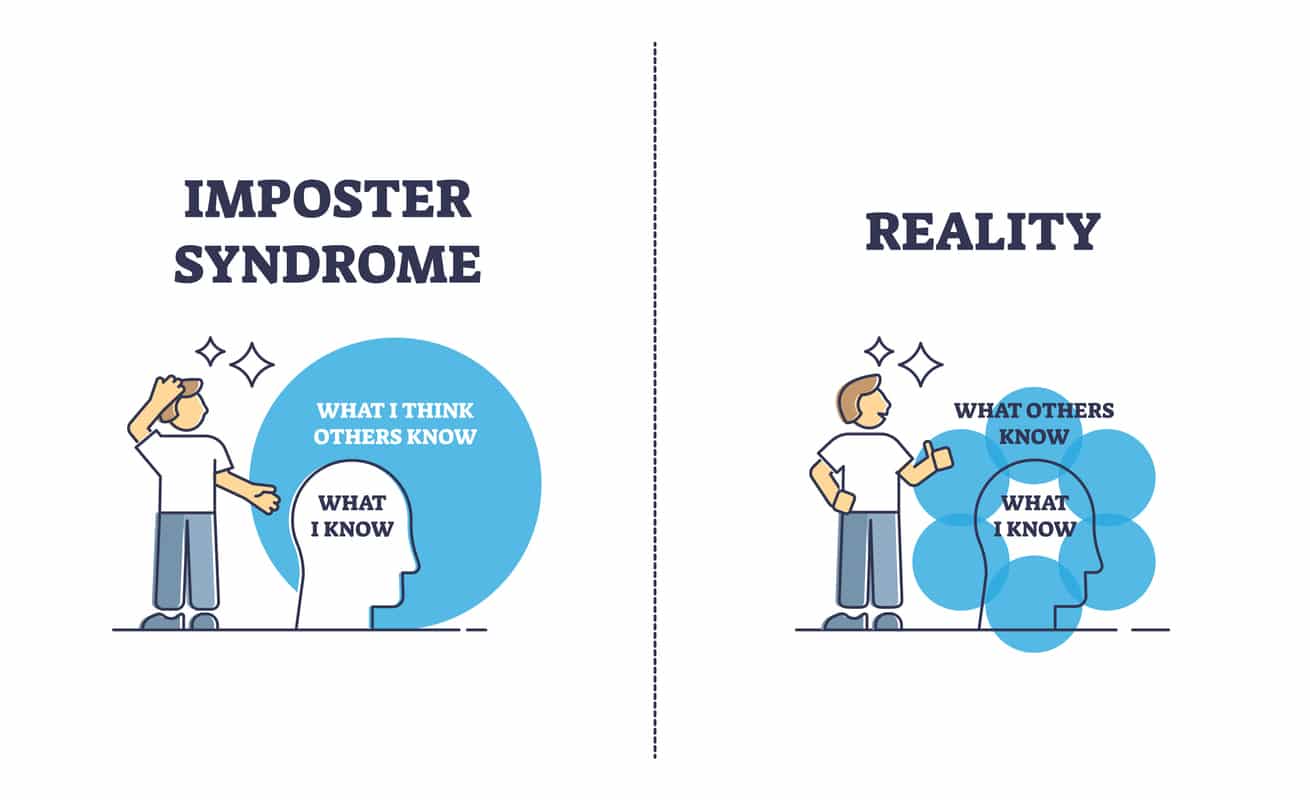
Why success doesn’t cure it
Many founders assume: “Once I raise a big round / hit ₹100 Cr ARR / get into YC, I’ll finally feel legit.” In reality, every milestone tends to move the goalpost. Seed-stage you looks up to Series A founders; Series A you looks up to unicorn founders; unicorn founders compare themselves to global category leaders.
Two things amplify this in India:
- The visibility of a few “poster” startups makes your own progress feel small, no matter how objectively strong it is.
- Social media and funding news cycles constantly showcase valuations, not the messy reality behind them, so your internal chaos feels like evidence you’re the odd one out.
So the internal script simply mutates:
- Early: “Who am I to start up? I don’t know enough.”
- Growth: “Now I’m handling a 50-person team; someone better should be doing this.”
- Late: “We’ve raised all this money; what if I’m the idiot who wastes it?”
The Indian data: it’s not just in your head
Indian founder mental health data lines up with what many feel anecdotally: early-stage founders report higher impostor feelings and lower everyday wellness than more experienced entrepreneurs. Emotional wellness platforms working with Indian startup ecosystems have highlighted that around a third of founders report low well-being, and roughly a similar proportion report impostor-like feelings, with early-stage founders hit hardest.
Interestingly, founders with more than six years of experience report much higher everyday wellness than early-career entrepreneurs, suggesting that time in the game doesn’t eliminate doubt but does build better coping strategies. That supports what many seasoned Indian founders will tell you privately: the fear never fully leaves, but your relationship with it changes.
Stories behind the statistics
When Indian founders talk openly about mental health, the stories often sound similar even if the businesses are very different. A B2B SaaS founder might describe snapping at family members and only realising later that the tension was a spillover from fundraising anxiety. An e-commerce founder might avoid taking investor calls for days because “what if they realise I have no idea what I’m doing?”
Founders who work with coaches or therapists frequently describe a few turning points:
- Realising that their sense of incompetence was often an assumption, not a fact, and starting to test it against evidence (e.g., customers kept paying, team members chose to stay).
- Involving partners or spouses in the support system, which reduced the “I am alone in this” narrative and improved home dynamics.
- Separating “I am not good enough” from “these are areas I genuinely need to learn,” which turns shame into specific learning goals.
These experiences mirror a broader global pattern where reframing thoughts, building awareness of triggers, and seeking structured help reduce the emotional intensity of impostor feelings, even if the thoughts still show up.
That is also why the kind of capital you choose matters. At Malpani Ventures, we are an investment firm that backs frugal, capital-efficient innovation in India. Instead of pushing founders into vanity metrics or aggressive burn, we look for entrepreneurs who are building thoughtfully, learning fast and staying in control of their wellbeing as well as their runway
Why experience helps (but doesn’t graduate you)
The data point that experienced founders report much higher everyday wellness isn’t about them suddenly becoming fearless superheroes; it’s mostly about pattern recognition and self-management. After a few cycles, founders learn that:
- Fundraising always feels existential, but the panic spike will pass.
- Churn, competition, and bad months are normal, not proof that “I was a mistake.”
- They don’t need to know everything, they just need to know how to learn fast and ask for help.
What you get with experience is not a degree that says “you’re no longer an impostor” but a thicker emotional skin and a toolkit: mentors, coaches, peers, rituals, and more realistic expectations of yourself.
Sharing a clip of how to find a mentor, where one of our portfolio founders shared his insights
Practical ways to work with impostor feelings
Rather than trying to “beat” impostor syndrome, it’s more realistic to design around it so it doesn’t quietly run the company. A few evidence-backed and India-relevant approaches:
- Name and normalise it
When you can say, “This is impostor brain speaking,” you create distance between the thought and your identity. In founder circles or WhatsApp groups, explicitly sharing lowlights instead of only metrics helps you see how common these feelings are. - Audit assumptions with facts
If the thought is “I’m incompetent,” write down what you’d expect from an actually incompetent founder: no learning curve, constant team churn, zero customer love, never shipping. Then compare that checklist with your reality. Often the data doesn’t support the harsh internal narrative. - Build a small, trusted circle
Because 1:many “community support” in ecosystems can feel superficial, deliberately cultivate 3–5 people (other founders, ex-founders, therapist/coach, partner) you can be radically honest with. High-quality support beats broad, shallow networks, which many founders report as emotionally unsatisfying. - Use structure to reduce chaos
Impostor feelings spike when days are a blur of firefighting. Simple structures—weekly one-on-ones, OKRs, cash runway dashboards, a standing “thinking day” each month—signal to your brain that someone (you) is in charge. That reduces the “I’m faking this” feeling. - Redefine “qualified”
In a zero-to-one startup, being “qualified” is not about having all the answers; it is about being willing to own the problem, learn faster than the environment changes, and adjust your ego in the face of data. Once this becomes your internal definition, you’re allowed to be a work-in-progress and still see yourself as legitimate. - Set a personal success definition
Many Indian founders unconsciously borrow metrics of success from funding news or peers: valuation, press, headcount. Defining what “personal success” means—perhaps in terms of autonomy, health, learning, or impact—reduces the comparative anxiety that fuels impostor thoughts.
A more honest founder narrative
The more nuanced narrative for Indian founders looks something like this:
- You are statistically more likely than the average professional to face anxiety, self-doubt, and emotional volatility.
- Early-stage will feel the most chaotic; if it feels like you’re winging it, that’s because you are, like everyone else.
- With time, the external stakes go up, but your internal ability to manage them improves—if you invest in it as deliberately as you do in product and growth.
- Impostor feelings are not a sign you’re in the wrong room; they’re often a sign you’ve chosen rooms that stretch you.
Entrepreneurship is less like school, where you graduate out of “freshman” status, and more like a craft where everyone is always somewhere between beginner and intermediate, just at different scales. The goal isn’t to become a founder who never feels like an impostor; it’s to become a founder who can feel like an impostor and still build wisely, ask for help, and choose a definition of success that doesn’t quietly destroy them.
The investors you bring on board can either amplify impostor feelings or help ground you. We always believe in backing founders who prefer sustainable progress over performative growth, and who are honest about their doubts instead of pretending to have all the answers. If you're building and feel we are the right investors for you, reach out to us at team@malpaniventures.com